



Axiom Verge 2 Review — More Vania Than Metroid
Axiom Verge 2 is almost a sequel in name only. It's still a metroidvania, and there are a couple of minor similarities between developer Thomas Happ's latest game and its 2015 predecessor, but these are minor aspects when compared to everything that's new and divergent about this unexpected sequel. Considering how revered the first Axiom Verge was as an affectionate homage to Metroid, presenting something that's vastly different is a surprising approach when building on those original foundations would have been more than enough for most. Instead, Axiom Verge 2 is a bold, daring, and ambitious sequel that falters in a few select areas.
One such area is the game's story, which starts much like the first game, as our human protagonist is transported to a bizarre alien world. This time around, you play as billionaire CEO Indra Chaudhari, who ventures into an Antarctic research base--and eventually another reality--in search of her missing daughter. This clear-cut story thread does just enough to keep the 10-hour adventure ticking along, but everything around it is coated in the kind of jargon-heavy lore that can only be fleshed out by finding all of the notes hidden throughout the game world. Reading each of these abandoned jottings does fill in some of the blanks left by the frugal narrative, but they're mostly so dense with impenetrable technobabble that it isn't worth seeking them out.
Fortunately, the narrative mostly takes a backseat to your exploration of its labyrinthian map. While your journey begins in the snowy tundra of the Antarctic, the adventure eventually takes you through several distinct biomes, such as an arid desert and flooded temple, that marks a clear departure from the subterranean expanse of the first game. These are detailed environments, too, with a sense of scale that extends far beyond the 2D foreground, with snow-capped mountain ranges and verdant forests stretching out into the horizon. If the first game was inspired by the "Metroid" part of the genre's namesake, then Axiom Verge 2 leans more heavily into the "Vania" side of the equation, swapping out the dark confines of its underground maze for a more spacious and detailed environment.
Continue Reading at GameSpotAxiom Verge 2 Review — More Vania Than Metroid
Axiom Verge 2 is almost a sequel in name only. It's still a metroidvania, and there are a couple of minor similarities between developer Thomas Happ's latest game and its 2015 predecessor, but these are minor aspects when compared to everything that's new and divergent about this unexpected sequel. Considering how revered the first Axiom Verge was as an affectionate homage to Metroid, presenting something that's vastly different is a surprising approach when building on those original foundations would have been more than enough for most. Instead, Axiom Verge 2 is a bold, daring, and ambitious sequel that falters in a few select areas.
One such area is the game's story, which starts much like the first game, as our human protagonist is transported to a bizarre alien world. This time around, you play as billionaire CEO Indra Chaudhari, who ventures into an Antarctic research base--and eventually another reality--in search of her missing daughter. This clear-cut story thread does just enough to keep the 10-hour adventure ticking along, but everything around it is coated in the kind of jargon-heavy lore that can only be fleshed out by finding all of the notes hidden throughout the game world. Reading each of these abandoned jottings does fill in some of the blanks left by the frugal narrative, but they're mostly so dense with impenetrable technobabble that it isn't worth seeking them out.
Fortunately, the narrative mostly takes a backseat to your exploration of its labyrinthian map. While your journey begins in the snowy tundra of the Antarctic, the adventure eventually takes you through several distinct biomes, such as an arid desert and flooded temple, that marks a clear departure from the subterranean expanse of the first game. These are detailed environments, too, with a sense of scale that extends far beyond the 2D foreground, with snow-capped mountain ranges and verdant forests stretching out into the horizon. If the first game was inspired by the "Metroid" part of the genre's namesake, then Axiom Verge 2 leans more heavily into the "Vania" side of the equation, swapping out the dark confines of its underground maze for a more spacious and detailed environment.
Continue Reading at GameSpotRazer Is Holding Beta Tests for its RGB Face Mask, Zephyr
Razer's Project Hazel RGB face mask is officially called Zephyr, and the company is now accepting community sign-ups that will give those interested a chance to test it out before its release.
Razer shared the news on Twitter, confirming that the Razer Zephyr is the latest evolution of its wearable air purifier.
Project Hazel is now officially Razer Zephyr – the latest evolution of our wearable air purifier. Designed to be safe, social and sustainable, Razer Zephyr sports 99% BFE, a secure silicon face seal and anti-fog coating. Join our community beta test: https://t.co/mlex2YSMpi pic.twitter.com/yLUj0lO2oJ
— R Λ Z Ξ R (@Razer) August 6, 2021
Zephyr is designed to be "safe, social and sustainable," and it also "sports 99% BFE, a secure silicon face seal and anti-fog coating." For those interested in signing up, all you have to do is go to the Community Beta Test page and enter your name, country, e-mail, social media, and a brief explainer of why you'd like to be part of the test.
Razer first unveiled this RGB face mask concept at CES 2021 in January, and it confirmed that it was becoming a real product in March 2021. Razer Zephyr is still slated to release this year, but Razer CEO Min-Liang Tan warned that there would be limited quantities of the mask "from the getgo."
Fortunately, Razer is planning on implementing a "sales by drops" strategy, meaning it will have a database of those interested in purchasing one and will let them know when units become available once again.
The Razer Zephyr is a "surgical N95 respirator" and has a high fluid resistance to protect against large droplets and splashes. It also features a clear and transparent design that will let others see you speak and pick up on facial cues easier. Its Voiceamp technology will also ensure your speech isn't muffled via its built-in mic and amplifier combo.
It also supports replaceable filters, has rechargeable ventilators, comes with a wireless charging case with UV sterilizer, is meant for daily use, and can take advantage of 16.8 million colors and a suite of effects thanks to Razer Chroma RGB.
Have a tip for us? Want to discuss a possible story? Please send an email to newstips@ign.com.
Adam Bankhurst is a news writer for IGN. You can follow him on Twitter @AdamBankhurst and on Twitch.
Razer Is Holding Beta Tests for its RGB Face Mask, Zephyr
Razer's Project Hazel RGB face mask is officially called Zephyr, and the company is now accepting community sign-ups that will give those interested a chance to test it out before its release.
Razer shared the news on Twitter, confirming that the Razer Zephyr is the latest evolution of its wearable air purifier.
Project Hazel is now officially Razer Zephyr – the latest evolution of our wearable air purifier. Designed to be safe, social and sustainable, Razer Zephyr sports 99% BFE, a secure silicon face seal and anti-fog coating. Join our community beta test: https://t.co/mlex2YSMpi pic.twitter.com/yLUj0lO2oJ
— R Λ Z Ξ R (@Razer) August 6, 2021
Zephyr is designed to be "safe, social and sustainable," and it also "sports 99% BFE, a secure silicon face seal and anti-fog coating." For those interested in signing up, all you have to do is go to the Community Beta Test page and enter your name, country, e-mail, social media, and a brief explainer of why you'd like to be part of the test.
Razer first unveiled this RGB face mask concept at CES 2021 in January, and it confirmed that it was becoming a real product in March 2021. Razer Zephyr is still slated to release this year, but Razer CEO Min-Liang Tan warned that there would be limited quantities of the mask "from the getgo."
Fortunately, Razer is planning on implementing a "sales by drops" strategy, meaning it will have a database of those interested in purchasing one and will let them know when units become available once again.
The Razer Zephyr is a "surgical N95 respirator" and has a high fluid resistance to protect against large droplets and splashes. It also features a clear and transparent design that will let others see you speak and pick up on facial cues easier. Its Voiceamp technology will also ensure your speech isn't muffled via its built-in mic and amplifier combo.
It also supports replaceable filters, has rechargeable ventilators, comes with a wireless charging case with UV sterilizer, is meant for daily use, and can take advantage of 16.8 million colors and a suite of effects thanks to Razer Chroma RGB.
Have a tip for us? Want to discuss a possible story? Please send an email to newstips@ign.com.
Adam Bankhurst is a news writer for IGN. You can follow him on Twitter @AdamBankhurst and on Twitch.
BeBot Is a Remote-Controlled Robot Keeping Florida Beaches Clean
A new remote-controlled robot called the BeBot is helping keep Florida beaches clean, and if all goes well, the other 29 BeBots manufactured could help clean additional beaches, resorts, and more.
Florida's beaches are known as some of the best in the world thanks to our blue and green planet, but humanity has gotten in the way of that at times by leaving trash in the sand or water. This is especially problematic as many plastics don't break down, which means they eventually find their way into precious marine ecosystems.
"Walk any beach or coastline around the world, and you're bound to encounter some form of plastic pollution," 4ocean, the marine cleanup company that purchased BeBot, notes on its website. "Plastic waste isn't just an eyesore that impacts tourism and local economies; it's also an environmental hazard that can harm wildlife and degrade crucial coastal ecosystems."
BeBot is working its way around beaches in South Florida at the moment, but another BeBot will soon be deployed to Hawaii to "support local partners and existing cleanup initiatives on the island of Oahu." 4ocean says the sole purpose of BeBot is to clean and restore the world's coastlines while also preserving the natural beach environment.
It's not fully automatic like iRobot's Roomba, but is instead remote-controlled by someone. According to BeBot manufacturer Poralu Marine, this is for safety reasons, as the machine will likely often be in the vicinity of beachgoers. It can be controlled remotely from up to 300 meters away, so while it isn't automatic, it will look autonomous to those near it.
"The BeBot can silently and discreetly clean up to 3,000m2 of beach an hour depending on the topography," 4ocean says. That 3,000m2 is the equivalent of seven basketball courts.
The BeBot is 100% electric, so it does not require fuel and isn't as loud as a traditional engine, which is great for those trying to relax on the beach. It runs on a mix of solar and battery power, too, so there's no harmful gas, liquid emissions, or diesel fumes.
"To help keep beaches clean, many coastal properties utilize heavy-duty equipment like tractors to rake the sand or manual sifters that are labor intensive, less efficient, trigger beach erosion, and automatically crush fauna and flora present in the sand," 4ocean's website says. "Yet these devices leave a lot of plastic waste behind because it's either too small or too deep in the sand to capture."
That's not the case with the BeBot, though. It operates at depths of up to 10cm and collects plastic debris as small as 1cm2, according to 4ocean. It can pick up cigarette butts, food wrappers, bottle caps, and other plastic fragments that are easily concealed by sand. It can also sift through sand, rake algae, lift and carry larger items like beach chairs, and level otherwise unleveled sand patches and fields.
4ocean says the BeBot program is on track to remove 20 million pounds of trash by the year's end and there are 30 BeBots in total right now that could be deployed to beaches in other places.
BeBot is just one of many cleaning robots trying to make the world a cleaner place. There's also the Clearbot robot Razer helped create to clean ocean waste. For more about the ocean and the world's beaches, read about this new reef discovered in Australia that's taller than the Empire State Building, and then read about this bionic moon jellyfish created by scientists after that.
Wesley LeBlanc is a freelance news writer and guide maker for IGN. You can follow him on Twitter @LeBlancWes.
BeBot Is a Remote-Controlled Robot Keeping Florida Beaches Clean
A new remote-controlled robot called the BeBot is helping keep Florida beaches clean, and if all goes well, the other 29 BeBots manufactured could help clean additional beaches, resorts, and more.
Florida's beaches are known as some of the best in the world thanks to our blue and green planet, but humanity has gotten in the way of that at times by leaving trash in the sand or water. This is especially problematic as many plastics don't break down, which means they eventually find their way into precious marine ecosystems.
"Walk any beach or coastline around the world, and you're bound to encounter some form of plastic pollution," 4ocean, the marine cleanup company that purchased BeBot, notes on its website. "Plastic waste isn't just an eyesore that impacts tourism and local economies; it's also an environmental hazard that can harm wildlife and degrade crucial coastal ecosystems."
BeBot is working its way around beaches in South Florida at the moment, but another BeBot will soon be deployed to Hawaii to "support local partners and existing cleanup initiatives on the island of Oahu." 4ocean says the sole purpose of BeBot is to clean and restore the world's coastlines while also preserving the natural beach environment.
It's not fully automatic like iRobot's Roomba, but is instead remote-controlled by someone. According to BeBot manufacturer Poralu Marine, this is for safety reasons, as the machine will likely often be in the vicinity of beachgoers. It can be controlled remotely from up to 300 meters away, so while it isn't automatic, it will look autonomous to those near it.
"The BeBot can silently and discreetly clean up to 3,000m2 of beach an hour depending on the topography," 4ocean says. That 3,000m2 is the equivalent of seven basketball courts.
The BeBot is 100% electric, so it does not require fuel and isn't as loud as a traditional engine, which is great for those trying to relax on the beach. It runs on a mix of solar and battery power, too, so there's no harmful gas, liquid emissions, or diesel fumes.
"To help keep beaches clean, many coastal properties utilize heavy-duty equipment like tractors to rake the sand or manual sifters that are labor intensive, less efficient, trigger beach erosion, and automatically crush fauna and flora present in the sand," 4ocean's website says. "Yet these devices leave a lot of plastic waste behind because it's either too small or too deep in the sand to capture."
That's not the case with the BeBot, though. It operates at depths of up to 10cm and collects plastic debris as small as 1cm2, according to 4ocean. It can pick up cigarette butts, food wrappers, bottle caps, and other plastic fragments that are easily concealed by sand. It can also sift through sand, rake algae, lift and carry larger items like beach chairs, and level otherwise unleveled sand patches and fields.
4ocean says the BeBot program is on track to remove 20 million pounds of trash by the year's end and there are 30 BeBots in total right now that could be deployed to beaches in other places.
BeBot is just one of many cleaning robots trying to make the world a cleaner place. There's also the Clearbot robot Razer helped create to clean ocean waste. For more about the ocean and the world's beaches, read about this new reef discovered in Australia that's taller than the Empire State Building, and then read about this bionic moon jellyfish created by scientists after that.
Wesley LeBlanc is a freelance news writer and guide maker for IGN. You can follow him on Twitter @LeBlancWes.
NEO: The World Ends With You Review – Reap What You Sow
I admire NEO: The World Ends With You for its youthful attitude and wild characterizations through eccentric personalities, extravagant character designs, and cheesy irreverence. To play through NEO TWEWY is to feel young again, inviting me to relive that too-cool-for-school vibe I had all those years ago with its predecessor. But that's also because, while it's a sequel that can be enjoyed on its own, its adherence to the original story of The World Ends With You brought me back to another time, and that might leave you lost if it passed you by.
Still, NEO TWEWY has its share of attractions, like a standout action-RPG combat system that evolves into an exciting rush of flashy spells filling up the screen. And while you might roll your eyes at the cast of characters' quirks in the beginning, they'll grow on you like good friends who were annoying at first. The same can be said about its soundtrack--songs that are odd upon first listen become bops that get stuck in your head. This is also a story-heavy RPG with intriguing twists and turns. However, in its exploration, riddle-laden objectives, and narrative wheel-spinning, NEO TWEWY drags its feet for a bit too long and too often before reaching its payoff.
NEO TWEWY revolves around the Reapers' Game, the premise that drove the original game. In a parallel dimension of real-world Japan, called the Underground (or UG), characters trapped in the Reapers' Game have been posthumously invited to play a game of ambiguous rules and objectives for another chance at life. But rules are meant to be broken and parameters are meant to be manipulated, so much so that you eventually disregard its logic and just embrace the cool nonsense used to bend the fate of the characters and the setting of Shibuya itself.
Continue Reading at GameSpotNEO: The World Ends With You Review – Reap What You Sow
I admire NEO: The World Ends With You for its youthful attitude and wild characterizations through eccentric personalities, extravagant character designs, and cheesy irreverence. To play through NEO TWEWY is to feel young again, inviting me to relive that too-cool-for-school vibe I had all those years ago with its predecessor. But that's also because, while it's a sequel that can be enjoyed on its own, its adherence to the original story of The World Ends With You brought me back to another time, and that might leave you lost if it passed you by.
Still, NEO TWEWY has its share of attractions, like a standout action-RPG combat system that evolves into an exciting rush of flashy spells filling up the screen. And while you might roll your eyes at the cast of characters' quirks in the beginning, they'll grow on you like good friends who were annoying at first. The same can be said about its soundtrack--songs that are odd upon first listen become bops that get stuck in your head. This is also a story-heavy RPG with intriguing twists and turns. However, in its exploration, riddle-laden objectives, and narrative wheel-spinning, NEO TWEWY drags its feet for a bit too long and too often before reaching its payoff.
NEO TWEWY revolves around the Reapers' Game, the premise that drove the original game. In a parallel dimension of real-world Japan, called the Underground (or UG), characters trapped in the Reapers' Game have been posthumously invited to play a game of ambiguous rules and objectives for another chance at life. But rules are meant to be broken and parameters are meant to be manipulated, so much so that you eventually disregard its logic and just embrace the cool nonsense used to bend the fate of the characters and the setting of Shibuya itself.
Continue Reading at GameSpotThe Ascent Review – Wretched Hive of Scum and Villainy
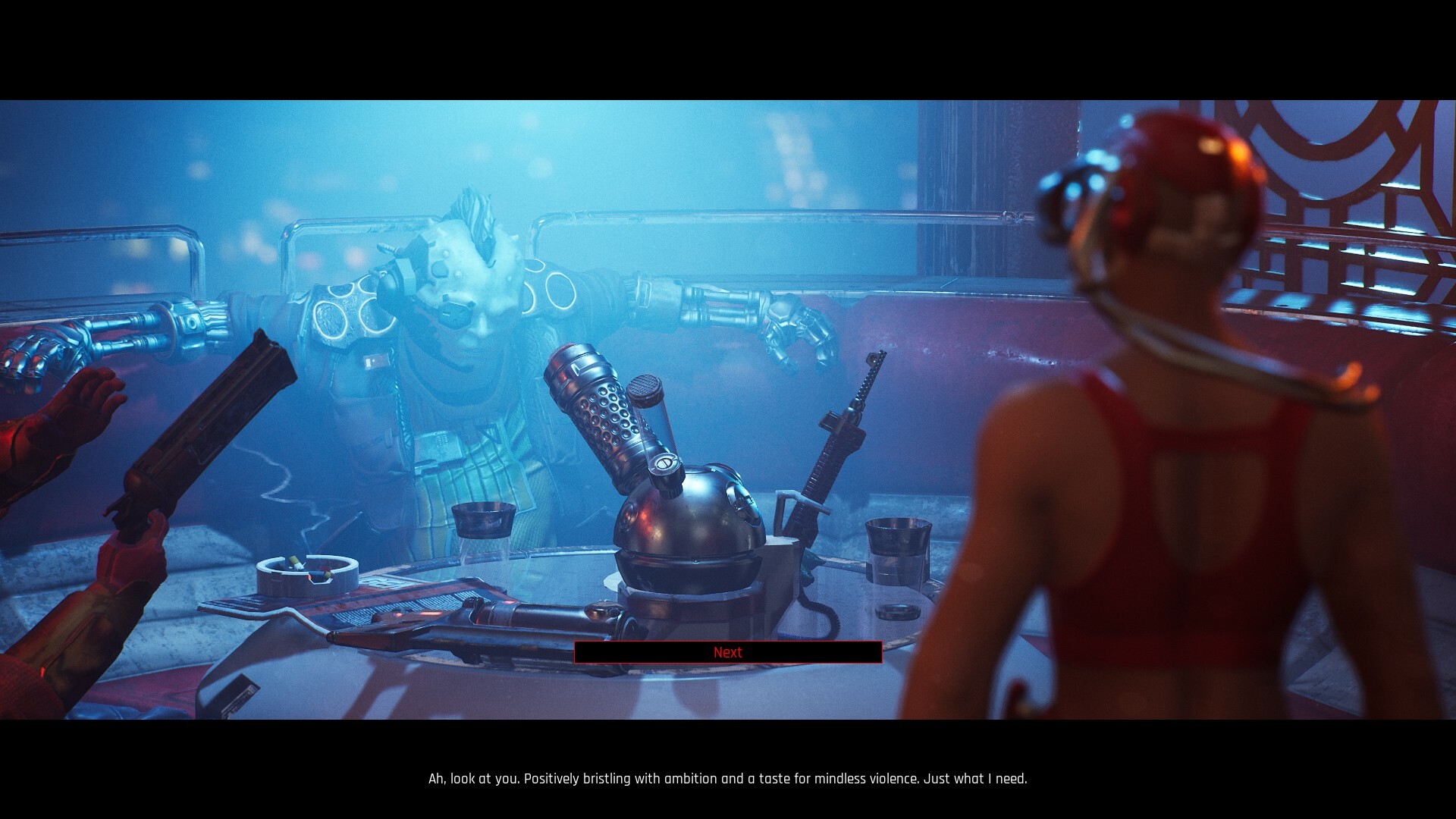
If you've ever worked a job where your bosses are the worst people imaginable, and they ask you to fix a problem using broken tools and then blame you for the results like it's your fault, then you have a pretty good idea of what it's like to play The Ascent. That's not just a metaphor, either. It's literally the baked-in plot of the game. It's the far-off future, and in order to escape to Veles (an intergalactic project block for all the galaxy's huddled masses yearning to breathe free), you must sign away your freedom to become an indentured servant, or Indent, to one of the various corporate masters running the place. In the first area of gameplay, you're literally forced to clean Veles' toilets by fixing the sewage system. By the time the credits roll, even after hours of mowing down scumbags, watching your character become a metal monster, and running odd jobs for weirdos and strangers, it’s hard to feel like you’ve worked your way up from those starting sewers.
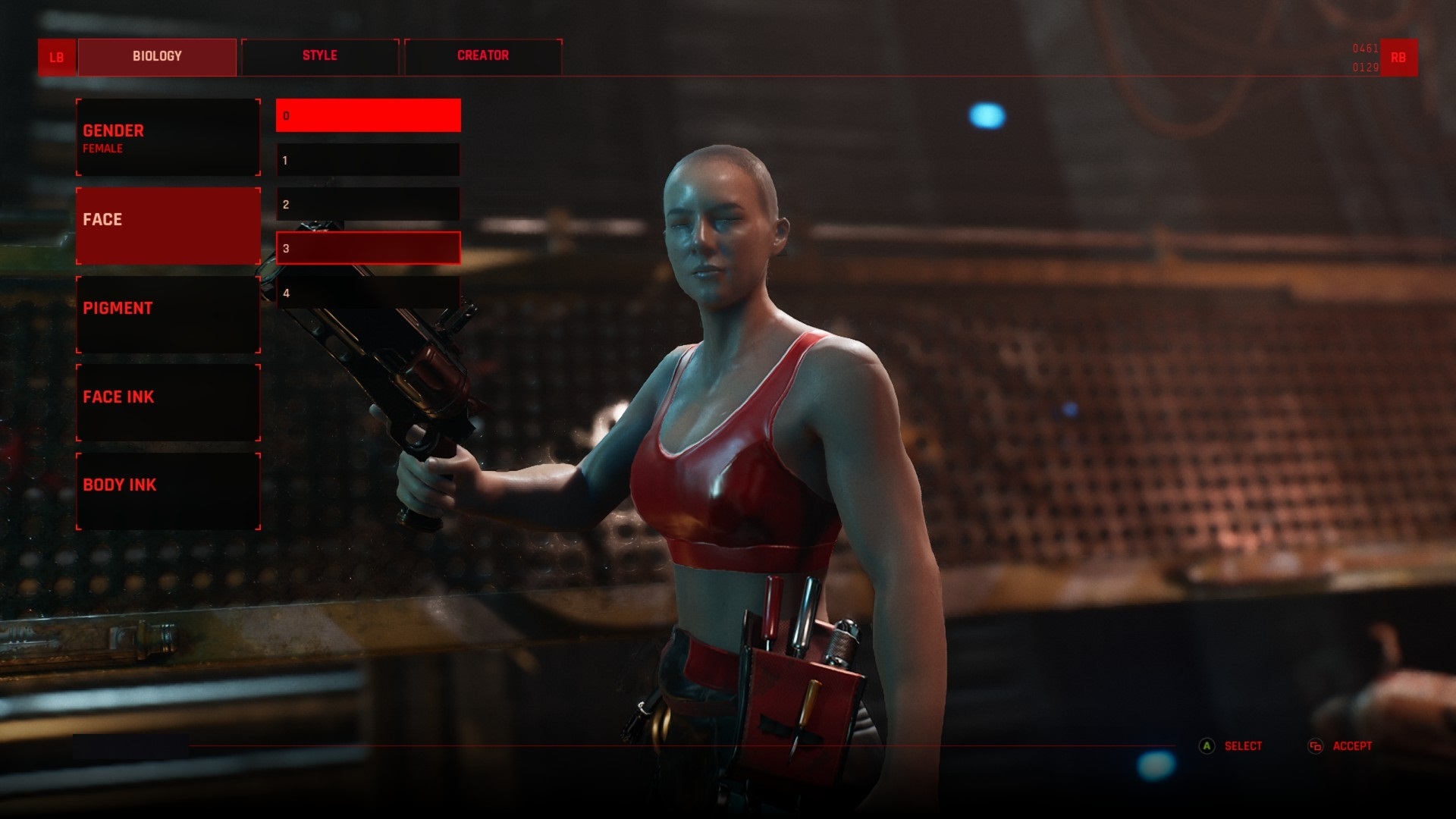
The small blessing is that the job involves fewer plungers, and more heavy sci-fi weaponry and cybernetic enhancements. The Ascent is a twin-stick shooter, with a slew of RPG elements thrown in for flavor. You'll find an impressive and unique assortment of pistols, shotguns, assault rifles, and rocket launchers along the way, each of which can attack enemy weaknesses for extra damage, and they all have very different practical feels in-game. Armor has a similarly expansive variety, with the added benefit of changing your character's look to an increasingly mechanical degree. It's not great that most of those armor pieces obscure your custom-made character--what's the point of creating a character whose face you immediately cover up?--but the designs are incredibly cool.
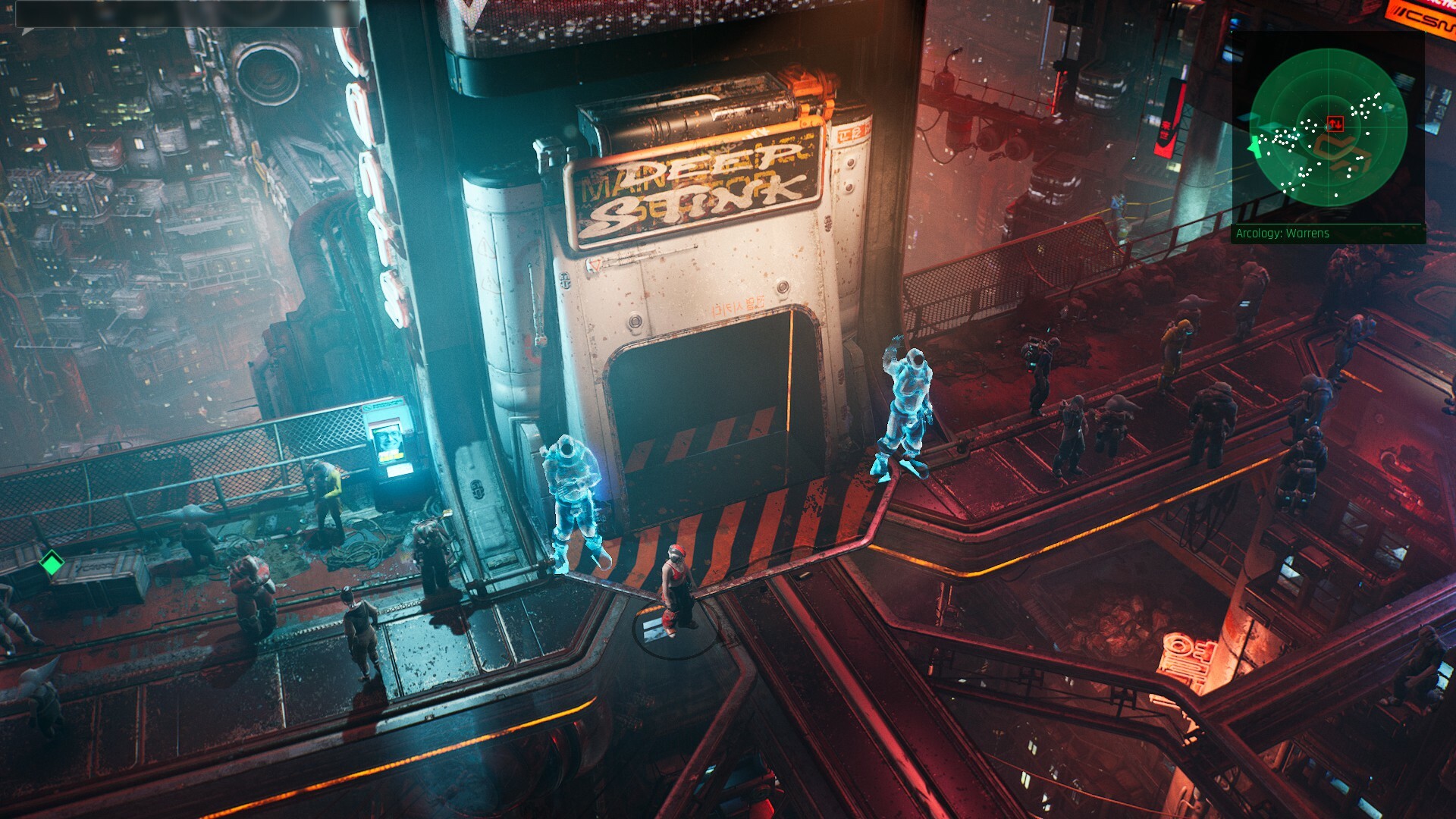

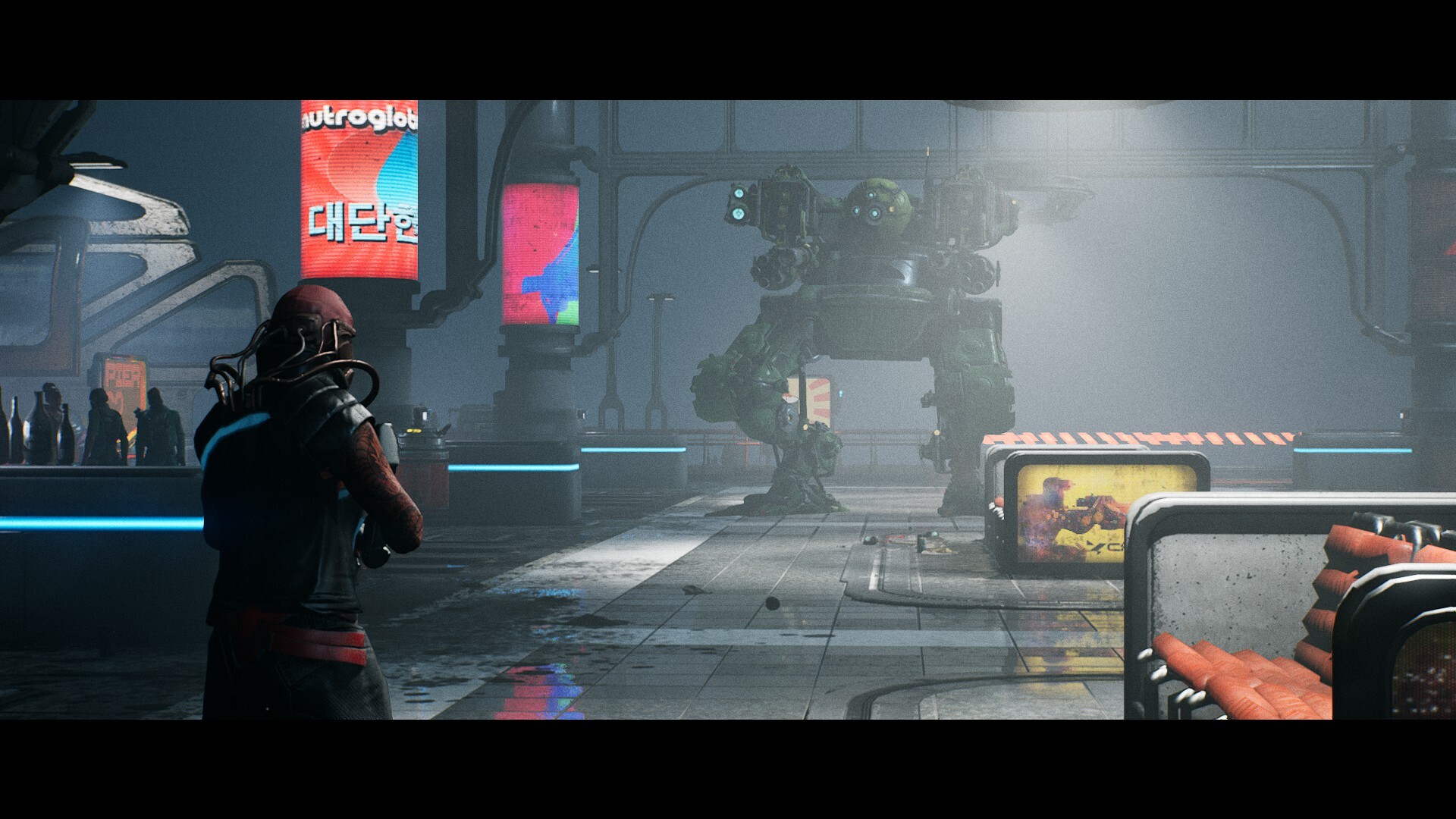


You'll also gain special abilities along the way, ranging from a hydraulic-powered melee attack that can vaporize your enemies to deadly drone companions who can fight by your side. My personal favorite is an army of explosive spider bots who run out and autonomously seek enemies to blow up. For the most part, though, you'll be spending most of your time running and gunning through what are essentially expansive, RPG-style, isometric dungeons, where both a well-thought out combination of armor and cyborg magic is just as important as having the right gun for the job. When your mission is done, you can head back to one of the game's bustling shopping districts to spend skill points on various character stats, as well as buy upgrades, new items, and new cybernetic toys to splice into yourself.
Continue Reading at GameSpotThe Ascent Review – Wretched Hive of Scum and Villainy
If you've ever worked a job where your bosses are the worst people imaginable, and they ask you to fix a problem using broken tools and then blame you for the results like it's your fault, then you have a pretty good idea of what it's like to play The Ascent. That's not just a metaphor, either. It's literally the baked-in plot of the game. It's the far-off future, and in order to escape to Veles (an intergalactic project block for all the galaxy's huddled masses yearning to breathe free), you must sign away your freedom to become an indentured servant, or Indent, to one of the various corporate masters running the place. In the first area of gameplay, you're literally forced to clean Veles' toilets by fixing the sewage system. By the time the credits roll, even after hours of mowing down scumbags, watching your character become a metal monster, and running odd jobs for weirdos and strangers, it’s hard to feel like you’ve worked your way up from those starting sewers.
The small blessing is that the job involves fewer plungers, and more heavy sci-fi weaponry and cybernetic enhancements. The Ascent is a twin-stick shooter, with a slew of RPG elements thrown in for flavor. You'll find an impressive and unique assortment of pistols, shotguns, assault rifles, and rocket launchers along the way, each of which can attack enemy weaknesses for extra damage, and they all have very different practical feels in-game. Armor has a similarly expansive variety, with the added benefit of changing your character's look to an increasingly mechanical degree. It's not great that most of those armor pieces obscure your custom-made character--what's the point of creating a character whose face you immediately cover up?--but the designs are incredibly cool.
You'll also gain special abilities along the way, ranging from a hydraulic-powered melee attack that can vaporize your enemies to deadly drone companions who can fight by your side. My personal favorite is an army of explosive spider bots who run out and autonomously seek enemies to blow up. For the most part, though, you'll be spending most of your time running and gunning through what are essentially expansive, RPG-style, isometric dungeons, where both a well-thought out combination of armor and cyborg magic is just as important as having the right gun for the job. When your mission is done, you can head back to one of the game's bustling shopping districts to spend skill points on various character stats, as well as buy upgrades, new items, and new cybernetic toys to splice into yourself.
Continue Reading at GameSpot